


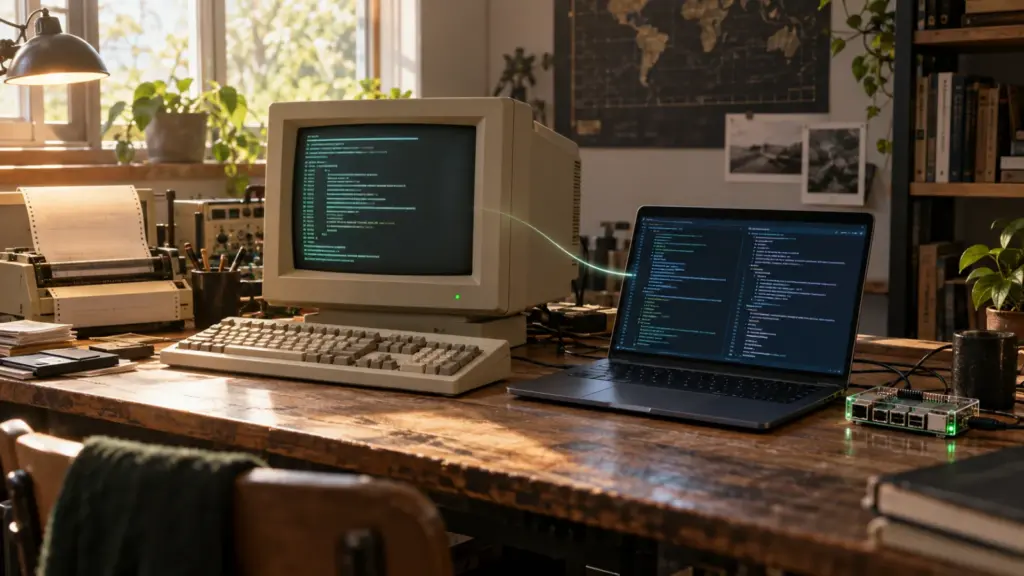
The GNU Project turned 43 on 27 September 2026. Richard Stallman announced it on 27 September 1983 as a plan to build a complete, freely shareable Unix-compatible operating system. GNU did not follow that first plan exactly, but its compilers, shell, libraries and command-line tools still form a major part of many Linux distributions today.
Key takeaways
- GNU was announced on 27 September 1983, while development began in January 1984.
- GNU is much more than a name attached to Linux: Bash, GCC, GDB, glibc, Coreutils and many familiar tools are GNU projects.
- Linux is the kernel; a traditional desktop or server distribution combines it with a user space that often contains many GNU components.
- Not every Linux-based system uses a GNU user space, so “Linux” and “GNU/Linux” are related terms rather than perfect synonyms.
- GNU Hurd remains under active development, but it has no stable production release.
What happened on 27 September 1983?
Richard Stallman posted the initial GNU announcement to the net.unix-wizards and net.usoft newsgroups on 27 September 1983. The proposal was ambitious: create a complete system compatible with Unix and make it available so users could study, change and share it.
The name GNU is a recursive acronym for “GNU’s Not Unix.” That joke also expressed a technical goal. GNU would behave enough like Unix to run familiar programs, but its code would be newly written and distributed as free software.
The announcement was a starting point, not a finished roadmap. The GNU Project’s own history says development began in January 1984, a few months later than first planned. The Free Software Foundation followed in October 1985 to support the work and the wider free-software movement.
| Date | Milestone | Why it matters |
|---|---|---|
| 27 September 1983 | GNU Project announced | Set the goal of building a complete free Unix-compatible system |
| January 1984 | Development began | Turned the proposal into working software |
| October 1985 | Free Software Foundation founded | Created organizational support for GNU and software freedom |
| 1990 | Most major system components existed | The main missing piece was a working GNU kernel |
| 1991–1992 | Linux arrived and became free software | GNU tools plus the Linux kernel enabled a complete, practical free system |
| 27 September 2026 | GNU reached 43 years | Its software remains embedded in everyday development and administration |
What did GNU actually build?
GNU did not merely publish a philosophy. It produced the working layers needed to compile software, manipulate files, debug programs and operate a Unix-like system. The project’s current software directory includes hundreds of packages.
Several became foundations of mainstream Linux development:
- GCC compiles C, C++ and other languages and has been central to building the Linux kernel and distributions.
- GNU C Library (glibc) supplies standard interfaces used by many Linux applications.
- GNU Bash provides an interactive shell and scripting environment on many systems.
- GNU Coreutils supplies common file, shell and text tools such as
ls,cp,mv,catandsort. - GNU Binutils includes the assembler, linker and other tools used to turn compiled code into programs.
- GDB helps developers inspect and debug running programs.
- GNU Make remains a common build-automation tool.
- Emacs, Grep, Sed, Tar and Gzip continue to serve developers and administrators across many platforms.
The details differ by distribution. A modern Linux system also contains large amounts of software from other communities: the Linux kernel, systemd, desktop environments, graphics stacks, web browsers, package managers and thousands of libraries. GNU is a major contributor to that environment, not the sole author of everything in it.
What is the difference between GNU and Linux?
Linux is a kernel. It manages hardware, memory, processes and other low-level resources. A usable operating system also needs libraries, a shell, system utilities, services and applications. Many desktop and server distributions combine the Linux kernel with a substantial GNU user space.
This is the basis of the term GNU/Linux. The GNU Project uses it to credit the GNU operating-system components paired with Linux. Everyday conversation, product pages and distribution names often shorten the whole system to “Linux.” Both usages exist, but they emphasize different layers.
| Layer | Typical example | Primary job |
|---|---|---|
| Kernel | Linux | Controls hardware, memory, processes and drivers |
| C library | GNU glibc on many distributions | Provides standard interfaces applications use to communicate with the system |
| Shell | GNU Bash on many installations | Runs interactive commands and scripts |
| Basic command-line tools | GNU Coreutils | Handles files, text and routine shell operations |
| Compiler and debugger | GCC and GDB | Builds and diagnoses software |
| Distribution layer | Debian, Fedora, Ubuntu and others | Integrates packages, updates, defaults and support |
Is every Linux system a GNU/Linux system?
No. Android uses the Linux kernel but does not provide the conventional GNU user space found on a desktop distribution. Alpine Linux commonly uses BusyBox and the musl C library instead of GNU Coreutils and glibc. Embedded systems can assemble an even smaller or more specialized user space.
That distinction is useful rather than merely semantic. A command, library behavior or build instruction that works on a GNU-based distribution may behave differently on Alpine, Android or another Linux-based platform.
Which GNU tools do Linux users still run every day?
You can inspect a system instead of guessing from its distribution name. These commands reveal whether several familiar programs come from GNU:
bash --version
ls --version
ldd --version
gcc --version
make --version
On a typical Ubuntu, Debian or Fedora installation, several outputs identify themselves as GNU software. Minimal containers may show BusyBox or omit a command entirely. Alpine’s ldd output normally points to musl rather than glibc.
uname -r answers a different question: it reports the running kernel release. It does not tell you which shell, C library or command suite makes up the surrounding user space.
This split also explains why the same Linux kernel can support very different systems. A general-purpose workstation, a cloud container and an Android phone can all use Linux while presenting completely different tools to users and developers.
For more historical context, see our look at how Linux changed during its first 35 years. Our Linux desktop market-share tracker follows the user-facing side of that ecosystem, while the Fedora 45 development overview shows how a current distribution brings kernel, GNU and many non-GNU projects together.
What did “free software” mean in the GNU Project?
GNU uses “free” to describe freedom, not necessarily a zero price. Its definition focuses on four practical freedoms: running a program for any purpose, studying and changing it, redistributing copies, and distributing modified versions. Access to source code is necessary for the freedoms to study and modify software.
That idea influenced the GNU General Public License. The GPL allows redistribution and modification while requiring distributed derivative works to preserve the same freedoms under its copyleft terms. The Linux kernel is distributed under GPL version 2, while different GNU packages use compatible GNU licenses selected by their maintainers.
The distinction still matters to administrators and developers. “Open source” often describes a development and licensing model; the GNU movement frames the issue around user control and ethical rights. The communities overlap heavily, but their preferred language and motivations are not identical.
What happened to GNU Hurd?
The original GNU plan included a kernel. Development of GNU Hurd began in 1990 on top of the GNU Mach microkernel, before the Linux kernel was available. When Linux appeared, the GNU Project continued Hurd development while GNU software was combined with Linux for practical systems.
The official Hurd project page says Hurd is under active development and has no stable version. Its latest numbered release remains GNU Hurd 0.9. Debian GNU/Hurd is available through Debian’s unstable archive for testing and development, but Hurd is not a normal replacement for a production Linux server or everyday laptop.
That outcome does not make GNU a failed operating-system project. The planned kernel did not become the mainstream kernel, yet many other layers became durable infrastructure used with Linux and on additional operating systems.
Our assessment after 43 years
GNU’s biggest achievement is not that the 1983 roadmap was completed exactly as written. It is that a call for a freely shareable Unix-compatible system produced tools, licenses and institutions that still shape how software is built.
For Linux users, the practical lesson is to see an operating system as a stack. Linux supplies the kernel. GNU often supplies the compiler, debugger, C library, shell and basic utilities. A distribution integrates those pieces with work from many other projects. Understanding those boundaries makes troubleshooting, portability and licensing decisions easier.
Forty-three years later, GNU is less visible than a desktop logo or a distribution name, but it remains present every time a developer runs GCC, an administrator writes a Bash script or a user copies a file with GNU Coreutils.
Frequently asked questions
When was the GNU Project announced?
Richard Stallman announced the GNU Project on 27 September 1983. Development began in January 1984.
What does GNU stand for?
GNU means “GNU’s Not Unix.” It is a recursive acronym chosen for a Unix-compatible system whose implementation would be free software rather than Unix code.
Is GNU the same thing as Linux?
No. Linux is a kernel. GNU is a broader operating-system project that supplies many tools and libraries commonly used around the Linux kernel.
Why do some people say GNU/Linux?
The term recognizes that many distributions combine the Linux kernel with major parts of the GNU system. Other people use “Linux” as shorthand for the complete distribution.
Is GNU Hurd ready for production?
No. The official project describes Hurd as actively developed but without a stable release. It is mainly suitable for experimentation and development.


Comments