


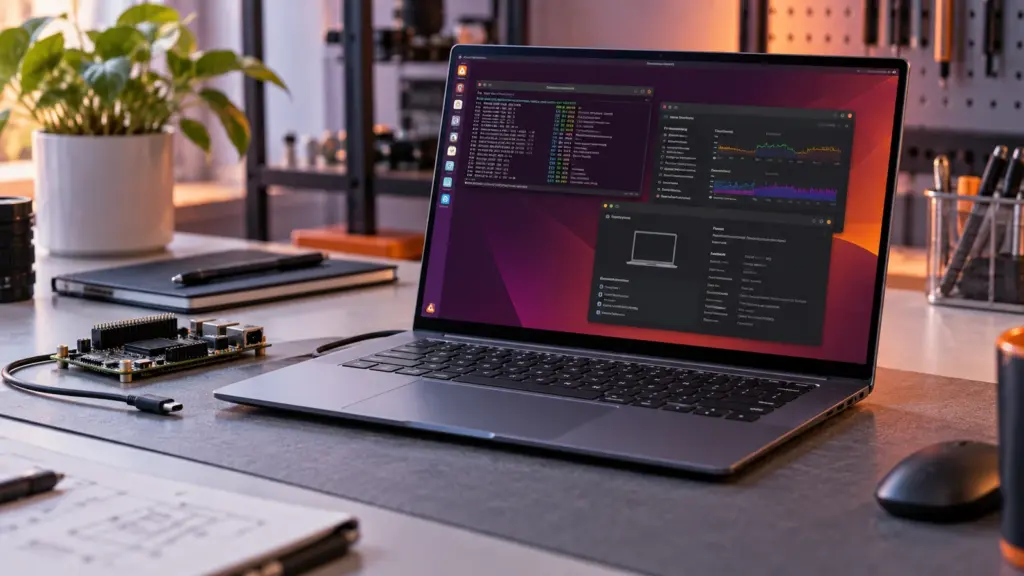
Official Ubuntu support is coming to laptops powered by Qualcomm’s Snapdragon X2 Series, with certified images targeted for 2027. Qualcomm has also opened an early Linux developer preview based on Debian 13 and a custom kernel while it works to upstream the drivers needed for graphics, local AI, connectivity and power management.
This does not mean an ordinary Snapdragon X2 laptop is ready for a one-click Ubuntu installation today. The current preview is meant for distribution maintainers, kernel contributors and hardware-enablement developers. Canonical says more details about preview images and supported laptop partners will arrive closer to launch.
- Canonical and Qualcomm are targeting official Ubuntu support for Snapdragon X2 laptops in 2027.
- Qualcomm’s current developer reference uses Debian 13 with a custom Linux kernel.
- Work includes open-source Adreno graphics, Hexagon NPU access, I/O, power and thermal support.
- The announcement covers Snapdragon X2 laptops, not every earlier Snapdragon PC or generic ARM device.
- Most users should wait for certified images and device-specific support instead of experimenting on a primary computer.
What did Canonical and Qualcomm announce?
On 23 September 2026, Canonical announced upcoming certified Ubuntu support for Qualcomm Snapdragon X2 Series laptop platforms. Qualcomm simultaneously published an early developer preview and upstream roadmap.
The important distinction is between hardware enablement and a finished consumer distribution. Qualcomm is contributing the lower-level pieces—kernel support, device trees and drivers—that distributions need. Canonical plans to turn that foundation into an optimized and certified Ubuntu image for supported laptops.
| Milestone | Current target | Intended audience |
|---|---|---|
| Early developer preview | Available for supported X2 development hardware | Kernel, distribution and hardware developers |
| Debian foundation | Support beginning by the end of 2026 | Developers and distribution maintainers |
| Production-enablement milestone | Qualcomm targets late November work completion | OEM and platform teams |
| Certified Ubuntu support | Targeted for the first half of 2027 | Developers, enterprises and eventual end users |
| Linux laptops from partners | Planned for the first half of 2027 | Commercial buyers |
Qualcomm says HP, ASUS and HUMAIN plan Linux support on Snapdragon X2 hardware during the first half of 2027. Exact models, configurations and sale dates have not yet been announced, so those plans should not be treated as confirmed retail availability for a particular laptop.
What already works in the Snapdragon X2 Linux preview?
Qualcomm validated its current work with a Debian 13 “Trixie” user space and a custom kernel. The preview is designed to let specialists build an image, boot supported reference hardware and test the components relevant to their work.
The company lists the following areas in initial enablement:
- Boot: UEFI with systemd-boot loading the Linux kernel.
- Core I/O: USB, PCIe and Qualcomm Universal Peripheral interfaces covering UART, I2C and SPI.
- Graphics and compute: upstream work through Freedreno, Turnip and Rusticl for Adreno hardware.
- Local AI: FastRPC driver work that can expose the Hexagon NPU to supported inference software.
- Power and thermals: platform-wide power management, thermal control and stability work.
Upstreaming matters because a distribution cannot sustainably depend on a large private patch set forever. Mainline drivers can be reviewed, maintained across kernel releases and shared by Debian, Ubuntu, Fedora and other Linux systems.
What is not ready yet?
Qualcomm explicitly calls this an early developer preview. It is not a promise that every keyboard, webcam, speaker, sleep state, external display or wireless configuration works on every Snapdragon X2 laptop. Laptop designs differ, and each OEM can connect components differently.
The current scope is also narrow: laptops using Snapdragon X2 Series processors. Qualcomm says the preview does not cover desktop form factors, earlier Snapdragon X platforms or unrelated development boards. Owners of first-generation Snapdragon X Elite and X Plus laptops should not assume this announcement guarantees equivalent support for their devices.
Production readiness requires more than reaching a desktop. Reliable suspend and resume, firmware delivery, audio tuning, camera support, battery reporting, graphics acceleration and thermal behavior all matter on a daily-use laptop. That is why the current work remains a foundation for developers rather than an installer recommendation for consumers.
When will Ubuntu for Snapdragon X2 be available?
Canonical’s broad public target is 2027. Qualcomm’s Summit announcement is more specific and places Ubuntu certification in the first half of 2027. Canonical says preview-build details and hardware-partner announcements will be shared closer to release.
Until then, users should avoid downloading unofficial images merely because they contain “Snapdragon X2” in the filename. A bootable ARM64 image is not automatically optimized for a specific laptop, and an incorrect firmware or device-tree combination can leave essential hardware unavailable.
The timing also means this work will develop alongside other Ubuntu platform changes. Our coverage of Ubuntu 26.10’s Rust Coreutils transition shows how the distribution is modernizing its software stack while Canonical and Qualcomm address a different problem: making the underlying ARM laptop hardware dependable.
What Snapdragon X2 hardware will Ubuntu be able to use?
Canonical describes Snapdragon X2 Series configurations with up to 18 Qualcomm Oryon CPU cores running at up to 5.0GHz, an NPU rated at up to 80 TOPS and up to 48GB of LPDDR5x memory with bandwidth up to 228GB/s. Wi-Fi 7 and optional 5G connectivity are also part of the platform story.
These are maximum platform specifications, not a guarantee for every laptop. Actual performance, memory capacity, battery life, cooling and connectivity depend on the processor variant and OEM design. “Up to 80 TOPS” also describes peak NPU capability; useful Linux AI performance depends on working drivers, supported runtimes, model compatibility and sustained thermals.
| Subsystem | Linux work described | What users should verify later |
|---|---|---|
| CPU | ARM64 kernel and system enablement | Application architecture support |
| Adreno GPU | Freedreno, Turnip and Rusticl | Display, Vulkan and compute stability |
| Hexagon NPU | FastRPC upstreaming | Runtime and model-framework support |
| Connectivity | USB, PCIe and platform I/O | Wi-Fi, Bluetooth, 5G and docking by model |
| Power | Power, thermal and reliability work | Suspend, battery reporting and sustained load |
Will existing Linux applications run on Snapdragon X2?
Snapdragon X2 is an ARM64 platform, so software must have an ARM64 build or be compiled from source. Many open-source Linux packages already support ARM64 because Debian and Ubuntu have maintained the architecture for years. However, a proprietary x86-64-only application will not become native merely because Ubuntu supports the laptop.
Containers face the same architecture rule: container images need ARM64 layers or a multi-architecture manifest. Emulation may help with some workloads, but it can reduce performance and does not solve every compatibility problem.
For developers, the attraction is a common Linux environment from cloud servers to an efficient local laptop. For ordinary users, the important check will be whether browsers, communication tools, VPN software, creative applications and any required commercial packages offer supported ARM64 builds.
This hardware expansion could help the wider Linux desktop ecosystem, but market impact will depend on finished devices and software—not only processor specifications.
Should you buy a Snapdragon X2 laptop specifically for Linux?
Not yet, unless you are a developer who understands the preview’s limitations. Anyone buying a primary Linux laptop today should choose hardware with documented support for the exact distribution and model.
When certified devices arrive, evaluate them using practical evidence: installation support, suspend reliability, external displays, webcam and audio quality, GPU acceleration, NPU tooling, battery life and vendor firmware updates. A certification badge is more useful than a generic claim that “Linux boots.”
The announcement is nevertheless important. Linux-on-ARM laptops have often depended on community reverse engineering after Windows hardware reached stores. Qualcomm and Canonical are now describing an upstream-first path before broad commercial availability, which should reduce integration work for distributions and manufacturers.
That approach resembles the broader hardware-enablement story we have followed with Asahi Linux on Apple M3 systems, although the projects, hardware ownership and driver paths are very different.
Our assessment
This is one of the more meaningful Linux laptop announcements of 2026 because it combines silicon-vendor upstream work, an official Ubuntu commitment and named OEM interest. It creates a plausible route to ARM Linux laptops that do not require users to assemble a custom kernel and device tree themselves.
The correct expectation is still cautious. Debian support is beginning first, Ubuntu certification is a 2027 target, and Qualcomm has not published a final list of certified retail models. The next evidence to watch is mainline driver progress, preview-image availability and device-specific testing—not marketing claims about peak CPU or NPU performance.
Frequently asked questions
Can I install Ubuntu on any Snapdragon X2 laptop today?
No. The current release is an early developer preview, and official certified Ubuntu images are targeted for 2027 on supported hardware.
When is official Ubuntu support expected?
Canonical says 2027, while Qualcomm targets certification during the first half of 2027.
Does the announcement cover first-generation Snapdragon X laptops?
No equivalent promise was made. Qualcomm says this preview focuses on Snapdragon X2 Series laptops and excludes earlier Snapdragon X platforms.
Will x86 Linux applications run natively?
No. Applications need ARM64 builds to run natively. Some software may work through emulation, but compatibility and performance vary.
Which distributions are involved?
Qualcomm’s current reference uses Debian 13 with a custom kernel. Debian enablement is planned first, followed by certified Ubuntu support in 2027.


Comments